Becoming a pilot isn’t just a dream — for many, it’s a life-changing career choice. But it’s no secret that flight training requires significant time, effort, and financial investment. With questions like “Is the flight school return on investment worth it?” on the minds of aspiring pilots (and their families), the best way to answer them is with transparency, real numbers, and an honest breakdown of costs vs. potential earnings.
In this article, we’ll explore what it really costs to go through flight school, what pilots can expect to earn over the course of their careers, how long it takes to “break even,” and why — for many — the commitment pays off both financially and personally.
Understanding the Cost of Flight Training
When evaluating the flight school return on investment, the first place to start is understanding the costs involved — and Paris Air provides an excellent transparent example of what it takes to train to become a career pilot.
Paris Air Fixed-Wing Pilot Training Costs
According to the Paris Air fixed-wing training page, the Commercial Pilot Certification with Multi-Engine Instrument Rating program — designed to take a student from zero experience to a career-ready pilot certificate — has a base price of about $66,335.
Beyond tuition, there are additional required fees such as:
- FAA Examiner: $3,000
- FAA Medical Exam: $175
- FAA Written Exams: $525
- Admission Fee: $550
- SEVIS (for international students): $350
- TSA: $420
- Fingerprinting: $50
And, if you’re relocating or need support, extra optional services include:
- Student Housing: ~$950–$1,150/month
When you add all fees together with training and living costs, many students looking at full career pilot certification in the U.S. see total investments that align with national averages of $70,000–$110,000+ from zero experience to airline-ready.
The Salary Reality: What Do Pilots Earn?
Investment alone doesn’t tell the whole story — you also need to look at potential earnings. Fortunately, pilot salaries in the U.S. are among the most competitive for careers that don’t require a traditional four-year degree.
Median and Career Earnings
- According to the U.S. Bureau of Labor Statistics, the median annual wage for airline pilots, copilots, and flight engineers was $226,600 in 2024.
- For commercial pilots (including charter, corporate, and other non-airline flying), median pay was $122,670.
More specific salary outlooks show ranges depending on experience and airline category:
- Entry-level regional airline first officers: typically around $90,000–$150,000+.
- Senior captains at major airlines: often exceed $300,000–$400,000+ annually.
Compared to many other career paths, these figures highlight a strong long-term earning potential — particularly as pilots gain seniority and experience.
When Do You Break Even? (ROI Timeline)
One of the biggest questions potential students ask is: How long until I recoup my investment? While every journey is different, a high-level framework helps answer this clearly.
Hypothetical ROI Scenarios
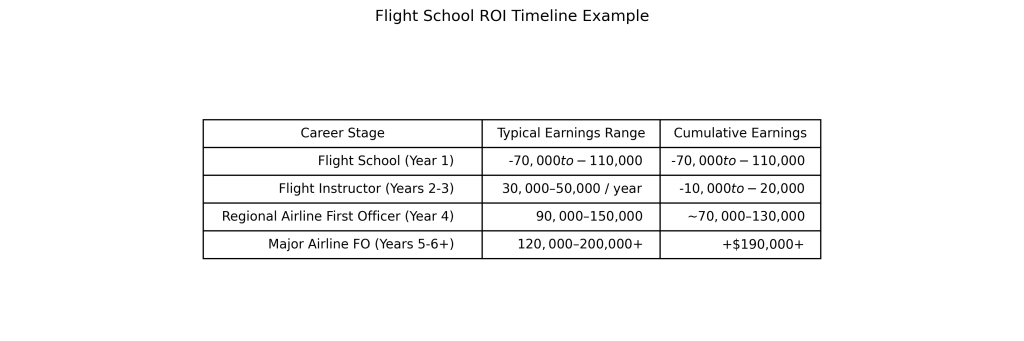
These figures are generalized estimates based on national salary data and typical career pathways; individual outcomes vary.
By this rough example:
- Many pilots begin to recoup their investment within their first few years of airline flying once the higher salaries begin to outweigh training costs and lower-earning instructor roles.
- It’s common for career pilots to recoup total flight training investment within 3–5 years, making the return on investment strong compared to many other professions where student debt may linger much longer.
Beyond Dollars: The Hidden ROI of Flight School
While numbers are important, they don’t tell the full story. Becoming a pilot offers valuable gains that aren’t directly measurable in salary alone.
1. Accelerated Career Path
Unlike traditional degrees that take four years or more, many flight programs — including Paris Air’s — allow students to go from zero experience to commercial pilot in a much shorter timeframe, accelerating when you can start earning at higher levels.
2. Year-Round Flying Advantage
Training in locations like Vero Beach, Florida, means fewer weather delays and more consistent flying, allowing students to build hours efficiently and reduce extended timelines to completion.
3. Skill Sets with Global Value
Flying requires technical skill, decision-making under pressure, precision communication, and leadership — all traits highly valued across industries even outside aviation.
4. Strong Industry Demand
Even with economic cycles, the long-term demand for pilots remains robust. Global growth in air travel and ongoing retirements mean opportunities continue to open for qualified pilots.
Real Risks & Honest Realities
To maintain credibility, it’s important to acknowledge the challenges:
Training Requires Discipline
Flight training is rigorous — it demands consistent study, regular practice, and performance under evaluation.
Medical Certification
You must meet FAA medical standards to pursue certain pilot licenses, and not everyone will qualify — which can impact your path.
Market Variability
While airline pilot demand is strong overall, specific hiring waves can vary by region and airline. However, long-term trends show solid growth.
Being aware of these ensures your decision is grounded in reality — not just optimism.
Final Verdict: Is Flight School Worth It?
So, is the flight school return on investment worth it? The honest answer is:
For the right person — someone who is genuinely committed to aviation, ready to meet the challenges head-on, and focused on a long-term career — yes. Flight school offers a compelling return on investment that blends strong financial outcomes with deep personal fulfillment.
Here’s why:
- Training costs are clear and structured (like at Paris Air), and many programs help you understand the full financial picture before you start.
- Pilot salaries — particularly for airline careers — are competitive and grow significantly with experience.
- Many students begin earning returns on their training investment within a few years of completing school.
- The lifestyle, flexibility, and opportunities in aviation are meaningful and rewarding in ways money alone can’t capture.
Your Next Step
If you’re weighing whether flight school is right for you, start by figuring out your goals:
- Do you want to fly commercially?
- Are you interested in airline careers or corporate charter?
- Are you prepared for the commitment of flight training?
At Paris Air, our admissions team is ready to help you understand training costs, timelines, and financing options so you can make an informed decision. Apply or request more info today — and take the first step toward turning your passion for flight into a thriving aviation career.
Schedule your discovery flight by emailing [email protected]